
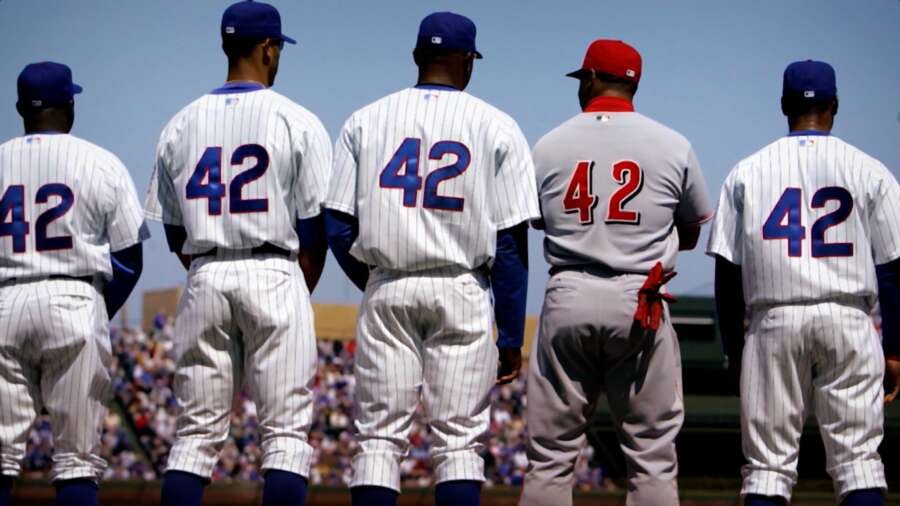
THE DECLINE OF AFRICAN-AMERICAN BASEBALL PLAYERS IN MAJOR LEAGUE BASEBALL
The decline in the percentage of African-American players in Major League Baseball is a real historical trend, but it is important to add one current qualification: the trend has recently begun to reverse modestly. African-American players were 6.0% of Major League Baseball on Opening Day rosters in 2024, 6.2% in 2025, and 6.8% in 2026—the first back-to-back yearly increases in at least two decades. What caused the decline. The cost of youth baseball.Travel teams, equipment, tournament fees, private instruction and showcases can be expensive. Major League Baseball has specifically identified the cost of equipment and travel and the growth of expensive showcases as barriers affecting African-American participation. Less access to organized baseball in some urban communities as baseball requires fields, coaches, leagues and considerable practice time. Major League Baseball has identified shortages of youth leagues, training facilities, experienced coaches and scouts in some predominantly African-American population centers. Basketball and football compete for the same athletesfor many young African-American athletes, basketball and football offer more visible pathways to college scholarships and professional careers. Major League Baseball has noted that the availability of college scholarships is substantially different from those sports. The college baseball pipeline is particularly important. This is one of the biggest issues. Major League Baseball reported in 2024 that only about 5% of college baseball players were African-American, and only about 3% when HBCUs were excluded. Major League Baseball also noted that roughly 75–80% of Major League Baseball Draft selections come through college baseball.
Fewer African American children see baseball as their primary sport. This becomes a cycle: fewer children playing baseball fewer high-level prospects fewer Major League Baseball players fewer local role models potentially fewer children choosing baseball. Scouting and exposure have changed. Traditional neighborhood scouting once played an important role in finding talent. Major League Baseball has acknowledged that talented African-American players sometimes don’t receive the same opportunities to be seen, particularly when identification increasingly occurs through expensive travel baseball, showcases and specialized events. The historical perspective is important. The percentage of African-American Major League Baseball players reached approximately 18.7% in 1981, according to research cited by Major League Baseball. By 2017 it was about 8.4%, and it subsequently fell further before beginning its recent modest recovery.
So this isn’t simply a question of African-American children losing interest in baseball. It is a combination of economics, access, competition from other sports, the college pipeline, scouting and the changing structure of youth baseball. There are encouraging signs. Major League Baseball’s development programs including Reviving Baseball in Inner Cities (RBI), Youth Academies, the DREAM Series, Breakthrough Series and the Hank Aaron Invitational are producing players who reach the professional pipeline. In 2025, 17 of the 59 African-American players on Opening Day rosters were alumni of Major League Baseball Develops programs and the 2026 figure of 6.8% is significant because it represents the second consecutive annual increase.
There is an interesting comparison worth researching: the growth of Latino participation in professional baseball versus the decline and recent recovery of African-American participation. Latino players now represent a much larger percentage of Major League Baseball rosters than African-American players, while both groups have faced different historical barriers to entry. “From Jackie Robinson to the Modern Game: Why Afican-American representation in Major League Baseball declined and what can be done to rebuild the pipeline.” That could include a 1947–2026 timeline, African-American Major League Baseball percentage by decade, Negro Leagues history, youth participation, college baseball, Major League Baseball Draft data, and the development of programs such as RBI and the Youth Academies.
