
COLOMBIAN BASEBALL: FROM CLASSIC DECEPTION TO THE STRUCTURING OF A NATIONAL PLAN
by: Luz Mary Escobar Moreno
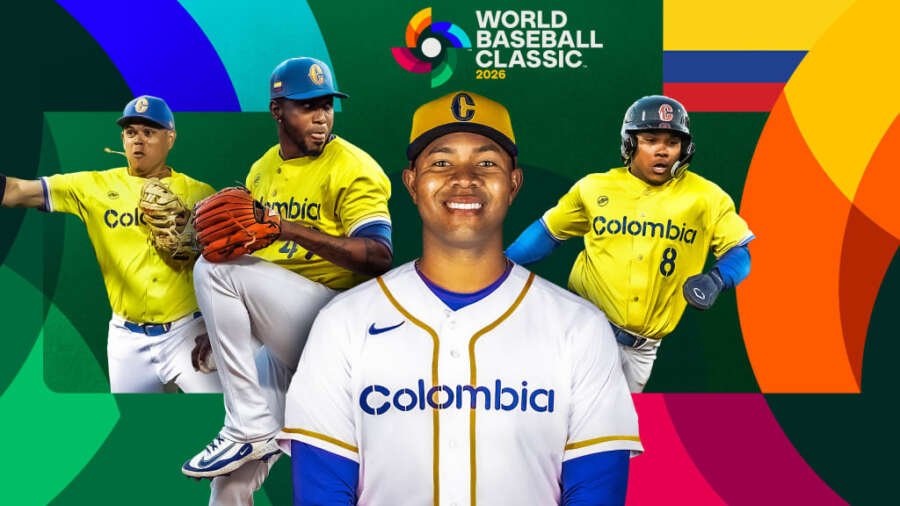
A prudent amount of time has passed since Colombia bid farewell to the World Baseball Classic. With a level head and the noise of defeat finally silenced, it is now possible to analyze the facts without passion. In a previous article, I proposed a thesis that time ultimately validated: the national team, despite the undeniable effort of its stars, was not going through its best competitive moment. We are no longer in the heat of the game; we can now say, without being labeled pessimists, that what we witnessed was the “chronicle of a foretold conclusion.” While the draw forced us to walk through the “valley of death” against powerhouses like Puerto Rico, Cuba, and Canada, the naked truth is that our team was not at a Major League level. There simply wasn’t enough wood for such a fire.
The Hangover of a Foretold Failure
The baseball-loving nation woke up from the dream to the sound of media “hits.” The reactions were immediate and confirmed that the mere illusion of winning cannot withstand a three-pitch strikeout. From the microphones of Win Sports, fierce criticisms were heard regarding the lack of leadership in key moments, pointing out that “Colombia was a team of flashes, but without a backbone.” Meanwhile, on ESPN panels, specialized commentators emphasized that the gap in technical level was “abysmal,” making it clear that one cannot go to war with soldiers who are just learning the terrain or with veterans who have already fought their best battles.
Even the regional press in Barranquilla and Cartagena, usually more romantic toward the sport, had to surrender to the evidence. Local newspapers reported that “the national team looked demoralized and without a clear game plan against rivals who surpassed us in discipline and craft.” These voices only confirmed what was already apparent: the team was a puzzle where desire was plenty, but competitive reality was missing.
The Root Problem: Seedbeds (Semilleros)
To get out of this quagmire, we must stop looking at the scoreboard and start looking at our own backyard. The real problem is that in Colombia, there are no developmental “seedbeds.” The creation and promotion of universal access seedbeds is a strategic necessity to break the current model of exclusion and guarantee the sustainability of national baseball. By democratizing access to high-performance training, we prevent technical development from being an exclusive privilege of those who can afford private academies or those scouted early for the export market. These spaces, integrated into a National Plan, allow for a broader talent detection base in traditionally underserved areas, ensuring the State fulfills its role as a guarantor of sporting equity. Fostering these centers is, ultimately, the only way to build a solid competitive identity that does not depend on third parties, allowing the country to cultivate a legacy of elite athletes trained under a unified methodology and prepared to successfully represent the national flag.
The cancellation of the U-18 National Championship in October 2025 exposed the structural crisis facing formative baseball in Colombia. The tournament became unfeasible because only the leagues from the departments of Córdoba, Chocó, and Antioquia confirmed their participation, while historical powerhouses like the Bolívar Department League were left out due to being “headless” and lacking a current administration. This administrative paralysis in regional leagues—private entities that rely on public funding and recognition to operate—prevented the mobilization of athletes, leaving the country without its primary scouting showcase and stalling the selection process for international commitments in that category.
We need a serious, medium-term Roadmap that involves experts to build:
- National Baseball Plan: This is the strategic tool that articulates the development of the sport from its formative stages to high performance. Its formulation is vital because it unifies the efforts of the Federation, the leagues, and the State under clear objectives, ensuring that the budget is efficiently invested in infrastructure, technical training, and talent detection, preventing success from depending on isolated efforts and guaranteeing long-term system sustainability. In this same sense, fans are tired of “near-wins” and demand a real restructuring of the Colombian Baseball Federation that goes beyond simply calling up Major League players every four years. The Federation must be more proactive and become an orchestrator of efforts that lead to the formulation of a Strategic Plan. The discontent is not just about the World Classic; there is significant frustration over the lack of support for youth categories and the feeling that baseball is stagnant in local neighborhoods while other countries in the region advance with clear strategies. A National Plan provides solutions and leaves nothing to chance.
- Alliances with the Private Sector: The role of the private sector as a sponsorship engine in Colombian baseball is practically non-existent in the critical stages of development. Unlike other sports where brands invest in youth programs as a visibility or Corporate Social Responsibility (CSR) strategy, baseball shows a concerning disconnect: companies do not finance national youth tournaments or early development processes. This commercial sponsorship void forces grassroots events to depend exclusively on public budgets, leaving the formation of new talent adrift whenever State resources are lost along the way. Without a culture of private investment to support the athlete’s development cycle, the sport lacks the financial stability needed to sustain a serious competitive calendar beyond the professional spectacle. It is time for Caribbean entrepreneurs to understand that investing in baseball is both good business and a way to strengthen the social fabric through CSR.
- Training the Trainers: To reach a world-class elite standard, the profile of the youth coach must evolve into an evidence-based talent development specialist. This professional requires a solid foundation in applied biomechanics, allowing them to optimize the athlete’s kinetic chain to maximize performance—such as exit velocity or pitching power—while always prioritizing the player’s structural health. It is indispensable that they possess data literacy, integrating precision tools like pitch-tracking systems and bat sensors to make technical adjustments based on objective metrics rather than just subjective observation. Furthermore, a high-level coach must master modern baseball-specific physical conditioning methodologies focused on functional mobility and explosive strength. Beyond technique, their work includes implementing sports psychology and neuroscience strategies aimed at improving decision-making under pressure and visual acuity. In this model, the coach acts as an integral manager who combines sports science with strategic planning, ensuring that young talent develops under the same quality standards demanded by the world’s most advanced organizations.
The State of Abandonment
All of this sounds great, but for it to work, there must be will and, above all, the resources must reach their destination. It is sad to see how sports are always left for last, while the country wakes up every day to new scandals of money lost in the labyrinths of bureaucracy.
The debacle of the 2026 World Baseball Classic was deeply linked to unprecedented financial asphyxiation, marked by a budget cut to the Ministry of Sport that reduced national resources to historic minimums. Funds plummeted from 1.3 trillion pesos to approximately 200 billion—a reduction of nearly 85%. The consequences for baseball were devastating: line items for high-performance international technical preparation were eliminated, and it became impossible to promote departmental league tournaments. These leagues, being organisms dependent on public funds for their administrative operation, were paralyzed. This financial “Squeeze Play” not only prevented the maintenance of competitive training processes prior to the 2026 Classic but dismantled the support structure that allowed local baseball to operate professionally, leaving the national sport in a situation of absolute institutional precariousness.
It is regrettable that in a government where there was so much talk of “change,” the only thing that doesn’t change is the habit of leaving the coffers empty and promises unfulfilled. In a scenario where they are experts at ensuring money never reaches its destination, Colombian baseball continues to wait in the dugout for a turn at bat that never comes. In the end, it is our boys on the diamond who pay the price for corruption and waste, abandoned to their fate.
