David Ortiz, el bateador designado y primera base conocido como “Big Papi” y quien fue una fuerza central en los equipos de los Medias Rojas de Boston que ganaron tres Series Mundiales, fue elegido para el Salón Nacional de la Fama del Béisbol el martes en la votación de los Cronistas de Béisbol. Association of America y verificado por Ernst & Young.
Los jugadores son elegidos para el Salón siempre que estén nombrados en el 75 por ciento de las papeletas emitidas por miembros votantes elegibles de la BBWAA. Con 394 boletas enviadas en las elecciones de 2022, incluidos seis espacios en blanco, los candidatos necesitaban un total de 296 votos para ser elegidos.
Resultados | Boletas públicas (8 de febrero) | Votantes | Miembros de la BBWAAOrtiz fue el único de los 30 candidatos en alcanzar ese umbral con 307 votos, lo que representó el 77,9 por ciento del electorado. Será homenajeado durante el fin de semana de inducción del 22 al 25 de julio en el Clark Sports Center en Cooperstown, NY, junto con seis ex jugadores elegidos en diciembre por dos comités Eras: Bud Fowler, Gil Hodges, Jim Kaat, Minnie Miñoso, Tony Oliva y Buck. O’Neil.
También será honrado ese fin de semana el ganador del Premio Ford C. Frick por transmisión, el difunto Jack Graney, y el ganador del Premio a la Excelencia en la Carrera de la BBWAA por escritura, Tim Kurkjian.
Ortiz, de 46 años, nativo de República Dominicana, fue canjeado por los Marineros de Seattle y liberado por los Mellizos de Minnesota antes de embarcarse en una carrera extraordinaria en Boston, donde jugó en equipos campeones en 2004, 2007 y 2013. Ortiz bateó .455 con tres jonrones y 14 carreras impulsadas en 14 juegos de la Serie Mundial y fue el MVP en 2013 cuando bateó .688 con dos jonrones y seis carreras impulsadas en 16 turnos al bate.
Ortiz, ocho veces ganador del Premio Edgar Martínez como bateador designado sobresaliente, conectó 541 jonrones entre sus 2,472 hits en 20 temporadas. El 10 veces All-Star y siete veces ganador del Silver Slugger lideró la Liga Americana en carreras impulsadas tres veces, y sus 1,192 extrabases lo ubican en el octavo lugar de todos los tiempos. Ortiz tuvo una de las mejores temporadas finales de cualquier jugador cuando en 2016 a los 40 años bateó. 315 con 38 jonrones y cifras altas en la liga en dobles (48), carreras impulsadas (127), porcentaje de slugging (.620) y OPS (1.021).

Los únicos jugadores además de Ortiz que fueron nombrados en más de la mitad de las boletas fueron el jardinero Barry Bonds con 260 votos (66 por ciento), el lanzador Roger Clemens con 257 (65.2), el antesalista Scott Rolen con 249 (63.2), el lanzador Curt Schilling con 231 (58.6), el primera base Todd Helton con 205 (52.0) y el relevista Billy Wagner con 201 (51.0).
Schilling había obtenido la mayor cantidad de votos en las elecciones de 2021 cuando ningún jugador logró la pluralidad del 75 por ciento con 285 votos de los 401 emitidos (71,1). Tuvo 54 votos menos en las elecciones de este año. Fue su última temporada en la boleta como también lo fue para Bonds, Clemens y el jardinero Sammy Sosa, quienes sumaron 73 votos (18.5). Sus casos ahora volverán al Comité de Reseña Histórica para su consideración en el Comité de la Era del Juego de Hoy, que se reunirá en diciembre en las Reuniones de Invierno en San Diego.
Los candidatos pueden permanecer en la boleta de la BBWAA hasta por 10 años, siempre que figuren en al menos el cinco por ciento de las boletas emitidas. Hay 13 jugadores de la boleta de este año que volverán a ser elegibles para 2023, incluidos dos de los 13 candidatos de primer año, los jugadores de cuadro Alex Rodríguez con 135 votos (34,3) y Jimmy Rollins con 37 (9,4).
El Salón de la Fama tiene 340 miembros electos, incluidos 268 jugadores, de los cuales 135 han pasado por la boleta electoral de BBWAA. La papeleta promedio en las elecciones de 2022 contenía 7,11 nombres, frente a los 5,87 del año pasado, con el 33,8 por ciento de los votantes utilizando los 10 espacios, frente al 14,5 por ciento de hace un año. El total de boletas emitidas marcó una tasa de devolución del 97,3 por ciento de las 405 boletas enviadas por correo a los votantes.
Por: Ray Avila
Quisqueya International Deportes
La Chercha Deportiva N.Y.
From The Press Box
Amaury Pi-González
David “Big Papi”Ortíz was elected to the Baseball Hall of Fame, Cooperstown, New York during his first year of eligibility today. He received 77.9 percent of the vote by the BBWAA. He becomes the fourth player born in the Dominican Republic to make it to Cooperstown, the others are Juan Marichal, Pedro Martínez and Vladimir Guerrero. Barry Bonds, Roger Clemens and Curt Schilling, on their 10th and final year of eligibility simply ran out of time.
David Ortíz (only player to be elected) played for 20 years, mostly as a designed hitter, an iconic player for the Boston Red Sox and one of their most popular players ever. During his career “Big Papi” hit 541 home runs and was selected to 10 All Star Games. Considered one of the best clutch hitters in postseason history.

A player must get to 75% to be elected. Here is the final voting.
- David Ortiz: 77.9 percent (Elected)
- Barry Bonds: 66 percent
- Roger Clemens: 65.2 percent
- Scott Rolen: 63.2 percent
- Curt Schilling: 58.6 percent
- Todd Helton: 52 percent
- Alex Rodriguez: 34.3 percen
Others: Jeff Kent 32.7, Manny Ramírez 28.9, Omar Vizquel 23.9, Sammy Sosa 18.5, Andy Pettitte 10.7, Scott Rollins 9.4, Bobby Abreu 8.6, Mark Buehrle 5.8, Tori Hunter 5.3, Joe Nathan 4.3.
From The Press Box
Amaury Pi-González
These “steroids era” players will probably fall short. Barry Bonds with an MLB record 762 home runs and 7 MVP Awards, Roger Clemens, with a record 7-Cy Young Awards, are the two first and then possibly Alex Rodríguez, who some time ago admitted to using PED’s and said it might cost him the Hall of Fame. David Ortíz is an interesting case, he also admitted to using PED’s years ago. Other interesting characters are Samuel “Sammy” Sosa, who said he “never tested positive for steroids” during his career and in 2005 he appeared in front of the US Congress House Committee on Government Reform together with Mark McGwire and Rafael Palmeiro as well as some baseball executives.
But if you want to talk about it interesting, how about Curt Schilling, who a year ago asked to be removed from the 2022 HOF list, but was rejected and will remain on the BBWAA ballot for the 10th and final time. About a year ago Schilling called the Baseball Writers Association of America a bunch of “spineless cowards”. Schilling was never connected to steroids use or any PED’s during his career, but his controversial twitters became a litmus test for most of those that opposed his point of view. If you are eligible you are eligible, it should only be about your baseball career. It is the Hall of Fame not the Hall of Saints and baseball should not bring Statues down, but built it for their heroes.
I do give a lot of credit to the BBWAA for rejecting Curt Schilling’s wishes to be removed from the ballot. If we go down that rabbit hole, we must also, never elect or maybe remove some that are already in Cooperstown. I am sure if research is done there will be found to be some very unsavory characters in the Hall. Such Hall of Fame luminaries like Roger Hornsby, a .358 lifetime hitter who batted over .400 three times, there were persistent rumors he was a member of the KKK. The great Ty Cobb, who by all accounts was a terrible human being who won a history-leading 12-batting titles, was an admitted racist. He is in Cooperstown. Cap Anson was widely reported by the media he was totally opposed to black players in baseball.
Back to the present. Some of the greatest sluggers in recent history who are tied to the use of PED’s, steroids and their home run totals: Barry Bonds 762, Alex Rodríguez 696, Sammy Sosa 609, Mark McGwire 583, Rafael Palmeiro 569, Manny Ramírez 555. Among the luminaries of the mound; Roger Clemens, a tremendous 24-year career ended with 354 wins, 3.12 earned run average, and 4,672 strikeouts, a 6-time 20+ game-winner. Clemens won a MLB record of 7 Cy Young Awards. I have a feeling a lot of ballots will be blank this year. However, if a BBWAA writer do not sends a ballot that means he/she is abdicating his responsibility. Each of the writers who vote can choose from 0 to 10 candidates. Last year no player reached the 75% minimum
Inductees from the era committee, elected last year: Six, Buck O’Neil, Bud Fowler, Jim Kaat, Tony Oliva, Orestes (Minnie) Miñoso, and Gil Hodges are in already. Remote possibility they will add any others on this list.
There is a guy that played more games than anybody else, 3,562 and also lead everybody in history in hits with 4,256, was selected to 17 All Star Games, yet he is the first to be banned from baseball (1989), for life since 1943 as an investigation determined he bet on games with the Cincinnati Reds while he was the manager. Peter Edward Rose “Mr.Hustle”, is still waiting for a Commissioner who will Pardon him. Note: His violation was while he was managing, not as a player. But gambling has always been the “capital sin” in the game.
——————————————————————————————————————————————————————————————————————–
Each voting cycle, qualified members of the BBWAA name no more than 10 eligible players whom they consider worthy of Hall of Fame honors. To be enshrined, a player must be named on at least 75% of the voters’ ballots. Currently, players are removed from the ballot if they are named on fewer than 5% of ballots or have been on the ballot 10 times without election.
El campocorto estrella agente libre Carlos Correa contrató al agente Scott Boras, dijo el propio jugador a Quisqueya International Deportes vía telefónica el martes por la noche.
En el día 47 del paro patronal de las Grandes Ligas, con transacciones congeladas y Correa aún sin equipo, el pelotero de 27 años se sumó a Boras, el veterano agente que antes del paro laboral negoció $630 millones en acuerdos para Corey Seager, Marcus Semien y Max Scherzer.
Correa, quien en siete temporadas con los Houston Astros hizo dos equipos All-Star y ganó la Serie Mundial de 2017, ingresó este invierno en la cima de los más cotizados agentes libres. Si bien varios equipos expresaron interés en Correa, Seager firmó el mega acuerdo previo al cierre patronal con los Texas Rangers por $325 millones durante 10 años.
En un comunicado que Correa le dio a Quisqueya International Deportes dijo: “Tomé la decisión de contratar a Boras Corporation para que me represente en el futuro. Boras Corporation ofrece el más alto nivel de experiencia en béisbol y experiencia comprobada”.
Correa dijo que no comentaría más allá de eso.

Antes de contratar a Boras, Correa estuvo representado por William Morris Endeavour, cuya empresa matriz, Endeavour, compró nueve equipos de ligas menores en diciembre. La Asociación de Jugadores de la MLB envió recientemente una carta a la compañía con una posible medida disciplinaria sobre la mesa por infringir las regulaciones de los agentes que prohíben la propiedad de equipos de ligas menores, como informó The Athletic por primera vez. La confusión con WME fue el telón de fondo en el que Boras reclutó a Correa.
La forma en que se desarrolle el mercado después de que finalice el cierre patronal podría depender de la rapidez con la que se llegue a un acuerdo entre la liga y el sindicato de jugadores. Después de una propuesta de la liga la semana pasada, un contraataque del sindicato podría llegar esta semana.
Una vez que termine el paro laboral, el mercado de Correa, y hacia dónde se dirige después de terminar quinto en la votación del Jugador Más Valioso de la Liga Americana la temporada pasada, será quizás la historia más importante del juego. Aunque otros grandes nombres siguen siendo agentes libres, entre ellos Freddie Freeman, Trevor Story, Clayton Kershaw y los representados por Boras, Kris Bryant y Nick Castellanos, Correa es visto como un jugador de nivel franquicia que debería dominar al máximo.
Correa bateó .279/.366/.485 en 148 juegos para los Astros, que perdieron la Serie Mundial contra los Atlanta Braves. Correa formó parte de los cinco equipos consecutivos de Houston que fueron al menos a la Serie de Campeonato de la Liga Americana, y fue una pieza clave en el equipo de 2017 que luego fue expuesto por su uso de un esquema de robo de señales.
Correa soportó los abucheos de los fanáticos durante una postemporada de 2021 en la que protagonizó la serie divisional, pero estuvo ligeramente por debajo del promedio con su bate el resto de los playoffs. Su guante fue excepcional como de costumbre, y entre la habilidad de su bate, un Guante de Oro en la posición más importante del campo y su corta edad, Correa tiene todas las características que típicamente conducen a contratos masivos de agentes libres.
Por: Ray Avila
Quisqueya International Deportes
La Chercha Deportiva N.Y.
Andreina Salas, born in Venezuela, who was Media Director for the Leones del Caracas in Venezuela’s professional baseball league, was hired by the American League Minnesota Twins as Media Assistant. The Hispanic Heritage Baseball Museum Hall of Fame congratulate Ms.Salas and wish her good luck on her new endeavor. And, welcome to the Big Leagues!

From the Press Box
Amaury Pi-González
For many broadcasters, (including yours truly) calling a game from New York is a unique experience. It is the #1 radio and television media market in the United States and Yankee Stadium is a special place. If you were born in New York or lived in New York, you probably will understand.
Although I was born 1300 miles from New York, in Havana, Cuba, I did live in New York, (Queens to be exact) after I was honorably discharged from the US Army in 1968. For a couple of years, while in New York, I attended Yankees’ as well as Mets’ games. However, I was always much more of an American League type of person, so more than often I would attend the games at Yankee Stadium as a fan.
The old Yankee Stadium had a unique atmosphere, certain magnetism; after all, it was called the House that Ruth Built. The New York Yankees have a storied history, winning 27 World Series, no other team is even close to matching that number. In 2021 the New York Yankees franchise had an estimated value of 5.25 billion US dollars, which ranks today #1 among all 30 MLB teams.
As a young man that started to dabble in journalism I attended many games at old Yankee Stadium, I remember a muggy summer afternoon during a doubleheader when the Yankees honored the great Mickey Mantle, in the middle of a doubleheader. I remember watching some great Yankees at that time in the 1960s, like Whitey Ford, Elston Howard, Joe Pepitone, and Luis “Tite” Arroyo, which I would interview a few decades later when I was in New York broadcasting during a series and during one of the famous Yankee Legends Reunion. Some of my first articles were published in a Spanish weekly from Newark, New Jersey.
My first of many trips as a broadcaster to New York was in 1981 when it was still the “old” Yankee Stadium with all the history hanging from its walls. That was a short season because of a player’s strike. I traveled to broadcast the Oakland A’s vs. Yankees after the A’s had beaten the Kansas City Royals. The Yankees eliminated the Oakland A’s and thereafter moved to the 1981 World Series; which pitted the Los Angeles Dodgers vs. the New York Yankees, which was won by the Dodgers in six (6) games. I also covered that World Series during the games at Dodger Stadium in Los Angeles.
In 40+ years in the baseball broadcasting business, I have traveled to all the 30 major league cities, including in the 1990s when there was a team in the beautiful city of Montréal, Canada, the Expos. But there is no other city for yours truly that offers the vibe of New York, especially Yankee Stadium when it comes to broadcasting a game.

This photograph was taken inside the visiting broadcast booth at the new Yankee Stadium in 2018, prior to the American League Wild Card game between the visiting Oakland Athletics and the New York Yankees. It was taken approximately 2 hours prior to the first pitch, ready with the lineups and my media notes for both teams. I had my luggage with me, to continue the postseason after New York, on the way to Boston. But the Yankees eliminated the A’s, and instead of continuing to Boston, I returned to Oakland the next morning after the game. Such is the life of a broadcaster, always at the mercy of the team, but that is part of the fun in this very interesting and challenging career.
I am happy to share the photograph, taken a couple of hours prior to a playoff game at Yankee Stadium, and some of my many memories. Thank you for visiting our website here with The Hispanic Heritage Baseball Museum Hall of Fame.
(Photo credit) From the APG personal collection.
by Ismael Nunez
It is time for Major League Baseball to retire #21 in honor of one of baseball’s greats, Roberto Clemente.
It’s up to you Commissioner. You are at bat.
Many grassroots activists and baseball fans have lobbied MLB to retire Clemente’s uniform number from all baseball teams. That’s an honor given only to one player: Hall of Famer Jackie Robinson.
The New York City Council’s Committee on Cultural Affairs, Libraries, and International Relations recently held a hearing on the resolution calling for Major League Baseball Commissioner Bud Sleigh to retire # 21 in honor of Clemente, a Hall of Famer and a humanitarian.
That January day advocates made their presentations before the City Council, saying why they support retiring the number. Two of them were judges from Connecticut: Carmen Lopez and Dale W. Radcliffe.
“We honor a young Latino from Carolina, Puerto Rico, who came north to play baseball for the Pittsburgh Pirates in the 1950’s and confronted the dual minority status of race and language,” Radcliffe said. “We honor a superb athlete…often over-looked and underappreciated, yet who managed to transform anger and resentment into determination and reached the pinnacle of his profession.” Radcliffe also spoke of the boricua’s accomplishments on the baseball field.

Lopez said it is about time that MLB retires the number. “I believe that MLB, as a good corporate citizen, has a wonderful opportunity to showcase a superstar who lived by the principles of respect and service,” Lopez said.
This move, she said, would help a future generation know the legacy of Roberto Clemente.
She also spoke about Clemente’s heroic acts.
Clemente is not a hero, she said, because he played baseball with skill and pride. He’s a hero because he led a life of service to others. He even lost his life in an attempt to help others. “These are the role models that our children and youth need,” she said.
William Gerena-Rochet, editor of Latinosports.com, spoke about how Clemente opened doors for future players.
“Clemente was not the first Latin American to play in the MLB,” he said. “He was the first Latino super star and began playing baseball when MLB teams still had quotas on how many players of color they would have on their teams at a given time. Whereas Robinson is said to have opened the gate, Clemente can be said to have held it open for the Latino players who followed,” he said.
Bryon Hunter, producer of the documentary “The Legacy of 21,” said that almost every ballplayer interviewed for the project agreed that #21 should be retired.
Julio Pabon, founder of Latino Sports, said Clemente deserves the honor because “he was more than just a great baseball player.” “The fact that he was voted into the Baseball Hall of Fame posthumously after his death without having to wait the five year period is a testament to his great ability as an athlete that still to this day is mentioned and compared when certain plays or throws are made from right field,” Pabon said.
“The fact that Clemente was killed on December 31, 1972 in an airplane crash on his way to take badly needed supplies to earthquake Nicaragua victims was the ultimate sacrifice that any human being can make,” Pabon said.
From The Press Box
by: Amaury Pi-González
This December 31, 2021, marks the 49th anniversary of the great Roberto Clemente plane crash on board a mercy mission flight he chartered to Nicaragua.
Roberto Clemente was the 11th player, among a total of 32 (to date) in major league baseball history to reach the magic 3,000 hit plateau. His 3,000 hit on September 31, 1972, was his last. Not by design but by fate. Just three months after that 3,000 hit (a double to left field at Three Rivers Stadium, Pittsburgh against New York Mets lefty Jon Matlack, who was the NL Rookie of the Year that same season ) Roberto Clemente died, when the plane he chartered with friends on a mercy mission crashed soon after take-off from Puerto Rico. The plane was loaded with aid to the people of Managua, Nicaragua, which suffered a terrible earthquake of 6.3 magnitudes that killed and injured dozens of thousands, just a week earlier to Clemente’s plane crash.
Roberto’s best friend in baseball was his teammate with the Pittsburgh Pirates and catcher Manny Sanguíllen, who told me during an exclusive telephone interview (published in Sports Radio Service last year) he could have easily joined Roberto on that fateful flight, but for reasons he could not control, never did.
During his rookie season (1955) with the Pittsburgh Pirates, Roberto wore No.13, but when center fielder Earl Smith parted ways with the Pirates, Clemente took No.21 which was used by Smith. Today that number 21 is one of the most famous numbers ever used by a player during a stellar Hall of Fame career. Just like all players (especially black players) love to wear No.47 during Jackie Robinson Day, over 30% of Hispanic players in MLB are very proud to wear #21 on Roberto Clemente Day.
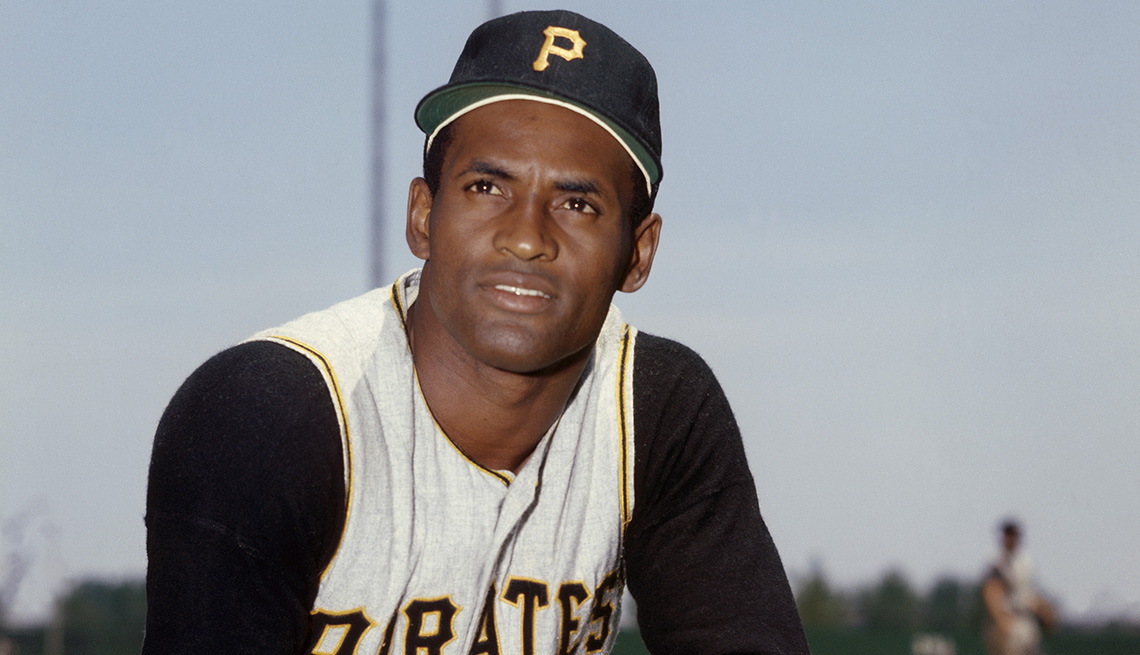
Although he played for 18 years, was selected to 15 All-Star Games, won 4 Batting Titles, 12 Gold Glove Awards, won the National League MVP Award, and the World Series Award, the Press never gave him the credit he deserved. Had 3,000 hits at the time of his death and a .317 combined batting average, but he was black and Puerto Rican so the racist media had “two strikes” on him, since his debut in the Major Leagues. Some in the media called him Bobby, but he hated that, he always said “my name is Roberto and that is how I want to be called”; he was a very proud man. During his last season in1972 (in a visit to San Francisco to play the Giants at Candlestick Park) I witnessed a Pittsburgh writer shout in the press box after Clemente struck out, the following: “send him back in a banana boat!” Imagine all the verbal abuse this man had to withstand, to play baseball, one if not, the most difficult game. Baseball is one (if not the most) difficult team sport to master.
Most baseball fans love to see a guy hit a ball 450 feet over the fence. I am proud to say that I saw Roberto Clemente play, and hit and drive in runs, and play defense like nobody else. His instinct was acute and seldom did he have to dive for a ball in the outfield, he knew how to play the outfield. His arm and accuracy on his throws were legendary. Many superstars of that era like Willie Mays, Stan Musial (just to mention a couple) have statues erected in the cities/ballparks where they played, but Roberto Clemente is in a class by himself, he has a Statue at PNC Park in Pittsburgh and a bridge named after him, The Roberto Clemente Bridge, also known as the Sixth Street Bridge, over the Allegheny River in the Steel City, as well as Statues in the South Bronx, New York, a city with the largest population of Puerto Ricans, as well as a Statue at the entrance of Ciudad Deportiva Stadium in Carolina, Puerto Rico, the city where he was born.
We at the Hispanic Heritage Baseball Museum are very proud to have Roberto Clemente among our greats enshrined forever, he was a great man. Among our numerous exhibits and displays for over two decades, Roberto is still the most popular Latino player and fans are always inquisitive about Roberto Clemente’s history and especially the way he left us, helping people that he didn’t know in a country that was not his own. I like to end with a baseball quote as we remember the Cometa de Puerto Rico.
There are many, many quotes about Roberto Clemente, but my favorite is by a gentleman, in my humble opinion, the best play by play baseball broadcaster who ever lived, who said: “Roberto Clemente could field the ball in New York and throw out a guy in Pennsylvania.” -Vin Scully Brooklyn Dodgers and Los Angeles Dodgers Play by Play.
From The Press Box
Amaury Pi-González
This past Sunday, December 5, the Hall of Fame Early Baseball Era Committee (Pre 1950) and Golden Day Era Committee (1950-1969) got together to vote on 10 players’ Hall of Fame list. One of those ten was Tony Oliva, who fell short by one vote last time in 2014 to put his name in Cooperstown, New York. The other one was Orestes “Minnie” Minoso. Others inducted were Gil Hodges, Buck O’Neil, Jim Kaat, and Bud Fowler. The committee that cast the votes consisted of members of the National Baseball Hall of Fame, executives, and veteran media members. One of those that were selected was my good friend colleague and legendary Spanish Voice for the LA Dodgers, Hall of Famer Mr. Jaime Jarrin. The ceremony will take place next July in Cooperstown, New York. Great job by this committee, as all these players, deserve to be in Cooperstown.
–Pedro Oliva López Fernández, better known as Tony Oliva was a right fielder who hit left and threw right. Played from 1964 to 1976, born in Pinar del Rio, Cuba, he ended his stellar 12-year career with .304 average, 220 Homers, 747 runs batted in, and 86 stolen bases. In 1964 won the American League Rookie of the Year and was one of the most dominant players during his first season, Oliva led the league in average with .323 average doubles with 43 and runs scored 109, and was ‘número uno’ in the majors in hits with 217 as well as total bases (374) producing 32 home runs and 94 RBI. Became the first player in baseball history to win two consecutive league batting titles at the start of his career.

Oliva almost didn’t make it. In 1961 the Minnesota Twins took a look at Tony during Spring Training but was released before Opening Day. He then considered returning to Cuba, but on April 17 that year, the US launched the Bay of Pigs invasion of Cuba, which failed (after the Brigada 2506 of Cuban patriots was double-crossed by the CIA) and soon after the US and Cuba broke diplomatic relations and he could not go back to Cuba because of travel restrictions. As fate has it, it was a blessing in disguise. He stayed in the US and traveled to Charlotte, North Carolina to train with the Twins Class A affiliate and later after a recommendation from some coaches; he was introduced to the General Manager Phil Howser, who helped him to get another chance at the Big Show.
—History as a Rookie: Tony Oliva ended with 217 hits in 1964. In the history of MLB only Ichiro Suzuki in 2001 (242) Lloyd Wanner 1947 (223) and Jimmy Williams in 1899 (220) have had more hits than Oliva. In 1964 finished fourth in the vote for MVP of the American League, only Orioles Brooks Robinson and Yankees Mickey Mantle finished ahead of Oliva.
—Other notable numbers: Tony Oliva led the American League on hits 5 seasons and won 3 batting titles. Between 1964 and 1971 only Pete Rose, Lou Brock, Billy Williams, and Roberto Clemente had more hits.
—1965 won one of his three batting titles as he hit for a healthy .321 the only player to win batting titles in his first two seasons and finished second to teammate and fellow-Cuban great shortstop Zoilo “Zorro” Versalles in the MVP voting.
—1966 Gold Glove: The Cuban right fielder had a cannon of an arm throughout his career and this year won the top award for fielding.
–Eight surgeries: Suffered ligament damage early in his career than for his last five years underwent eight knee operations. It was not until the mid-1970s that Arthroscopic surgery came about, by then Tony was not the same player and that robbed him of a few more years of his career. Although his knees were not that good he was such a good hitter that he was also a Designated Hitter for the Twins in 1973 when the new DH rule began.
Tony Oliva’s number 6 was retired by the Minnesota Twins in 1971 and was inducted to the Twins Hall of Fame in 2000 with Rod Carew, Kirby Pucket and owner Calvin Griffith. Now, Tony Oliva joins his very good buddies in Minnesota, Rod Carew, Harmon Killebrew and Kirby Puckett in Cooperstown. In 1987 when the All Star Game took place at the Oakland Coliseum, I invited Tony to my baseball radio show; he took so many calls from fans that I had to ask for special 15 additional minutes from the next show that was going to air. It was granted and the lines were still lit-up when he had to leave.
Now going to Cooperstown. Oliva is also enshrined in the National Baseball Hall of Fame and Museum, Cooperstown New York, Minnesota Twins Hall of Fame, Hispanic Heritage Baseball Hall of Fame and Museum.
A jovial man with a great attitude who is 83 years young has made it to the top, but in 1961 he though his career might not even get started in baseball. Tony Oliva never played in the Cuban Winter League which was nationalized that same 1961 by Cuba’s communist dictatorship. That league was regarded as the best Winter League in the world, with talent from Cuba and Major League Baseball, with such players as Orestes (Minnie) Miñoso, Brooks Robinson, Cookie Rojas, Camilo Pascual, Bob Shaw, Jackie Brandt, Bill Werle, Pedro Ramos, Jim Bunning, Bob Allison, Chico Fernández, Zoilo Versalles, Mike Fornieles, Mike Cuellar and many others. The late Bill Werle, born in the Bay Area used to tell me when he was a scout for the Orioles “Cubsa had the best Winter League, and most of us wanted to go there, because the caliber of baseball was great and the pay was also very good”. Werle pitcher in the major leagues and in 1956 won the Cuban Winter League title with the Tigres de Marianao.
Tony Oliva was inducted into our Hall of Fame in 2014 in Minneapolis.
———————————————————————————————————————————–
———————————————————————————————————————————–
Orestes (Minnie) Miñoso. Played for 20 years in the major leagues and in 1949 as a rookie with the Cleveland Indians became the first Hispanic player of black skin in las Grandes Ligas. Prior to his debut with Cleveland, he played from 1946 to 1949 with the New York Cubans, who played since the 1930’s in the Negro Leagues. First time I remember seeing Miñoso was in the mid-1950’s, when my father took me to one of the Winter League Games in Havana, Minnie was playing left-field for the Tigres del Marianao team and he was as popular as anybody in Cuba. Decades later I saw him play in the Major Leagues with the Chicago White Sox, team which he played the most during that 20-year career.
There is only one guy in history than when you say “Minnie” everybody in baseball knows who you are talking about. He played for five decades from 1949 until 1980. There is only one Minnie indeed. I first met him when he was playing with the White Sox and interviewed him in various occasions. He was as enthusiastic as anybody that was glad to be wearing a major league uniform. In 1980, during his last season and his last trip as a player to Oakland, he told me he did not like the solid black uniforms as he was wearing with shorts, he told me; “I do not like these uniforms because my knees are ugly”. During a broadcast I was doing with the LA Angels Spanish radio in Chicago in the 2005 season, he sat with me most of the game doing commentary, and he truly enjoyed it, as he told me on the air: “I feel I am in Cuba sitting with you doing this game here”.

There was a time after the 1964 season that Minnie left the major leagues to play and manage in Mexico until 1973, then he made another couple of comebacks until he totally retired in 1980. Although towards the end of his career he was mostly used as a promotional tool for the White Sox, nevertheless inspiring many players like José Abreu, also born in Cuba who told me Minnie was his inspiration since he was a little boy in Cuba.
Minnie died March 1, 2015 in Chicago of a tear in the pulmonary artery, he was 90 years old. The White Sox had retired his famous #9 in 1983 and erected a statue outside U.S. Cellular Field in 2004. Chicago mourned the Cuban-born player like he was ‘one of their own’ One of the tallest buildings in downtown Chicago had a huge number 9 illuminated over half of the building as well as numerous memorials depicting his life and exploits in the game he so much loved. He told me he was “ready to play” when he came to Oakland in 1980, when he was 55 years young, he did not play in Oakland but he did played in 2 games that season and did not get a hit in 2 turns at-bat. His career was done.
Minnie ended his 20 year MLB career with a solid .299 batting average.195 home runs, 1.093 RBI. 216 stolen bases led the American League in triples and stolen bases three times apiece and ended with a total of 2,110 hits. Currently listed #10 in history in ‘hit by pitches’ 195 times got hit at the plated, and for years he led the American League in ‘hit by pitches’.
Now going to Cooperstown, Orestes Saturnino “Minnie” Miñoso is also enshrined in the Cuban Baseball Hall of Fame (In Exile) in Miami, 1983, the Mexican Professional Hall of Fame in 1996 and The Hispanic Heritage Baseball Museum Hall of Fame in 2000.
Tony Oliva and Minnie Miñoso are the third and fourth Cuban-born players now in Cooperstown. The others are, Martin Dihigo and Tony Pérez.
Orestes “Minnie”Miñoso was inducted into our Hall of Fame in 2002 at old Comiskey Park, Chicago.
From The Press Box
By Amaury Pi-González
At 12:00 AM (midnight) Thursday, December 2, 2021, owners locked out players after both sides failed to come to a contract of a new CBA (Collective Bargaining Agreement). For the first time since 1994-1995 there is a lockout in the game. The best news is that this is happening early, with two-and-a half months before all 30 teams report to their respective training camps in Arizona and Florida. The 2022 season is scheduled to begin on March 31.
Without a new CBA, which is the negotiated accord that governs 99.9 % of the working relationships between MLB and MLBPA (players association), there is no baseball, there are no games, and transactions between teams are now frozen.
During a lockout, free agency and trades of major league players are not allowed.
To make this clear: A strike is when the labor side (players and their union) puts a halt to operations, while a lockout is when management (owners) initiates the stoppage. In other words; a strike is when the players refuse to work while a lockout is when the owners refuse to permit the players to play. In this case, it is a lockout.
During the past three weeks, teams have spent close to $2 billion dollars in player signings. Max Scherzer, Corey Seager, Marcus Semien, Robbie Gray, Byron Buxton, Kevin Gausman, and Javy Baez are among some of the players that have gotten new contracts with new teams between $100 million to $325\ By looking at these signings we would thing the business of baseball is doing great. Owners do not pay these contracts, because they are “nice guys”, as blunt as it sounds, owners do not go into the baseball business to be nice, but to make money. Because many of them want to win and want to hire the best talent available they make these investments. The MLB revenues have increased from less than $5 billion in 2005 to more than $10 billion, during the last pre-pandemic season.

I cannot believe this lockout could go into the 2022 season, but if that happens nobody should be shocked. There is too much at stake here for the game. Aside from this two protagonists (owners and players), there are many others that work in the game of baseball around the 30 major league cities in the country. They all want stability in their lives, anxiety is considered a disorder and it is not pretty. Teams also like to plan for sponsors, ticket sales, promotions, many peoples livelihood depends on the business of baseball and the majority are not players or owners.
There are many things that both sides are and will have to negotiate for the next CBA contract (usually a contract of this sort last for 5 years). Below are just a few of those:
-Pitch clock (yes, to ‘speed-up’ the game)
-Creation of a “salary floor”
-Salary arbitration for players after two years, not the three currently. A quicker path to free agency.
-Universal Designated Hitter
-Rookies now make $570,00 (Union wants to increase that salary for first year players.
-Revenue sharing (in 2021 a modified, Loan-based revenue sharing was adopted)
And many other issues that will not take a week or two to come to an agreement, or maybe it will?
We can only go from the previous record of these type of negotiations and it is not a pretty sight.
“Baseball is like a poker game. Nobody wants to quit when he’s losing; nobody wants you to quit when you’re ahead.”-Jackie Robinson.